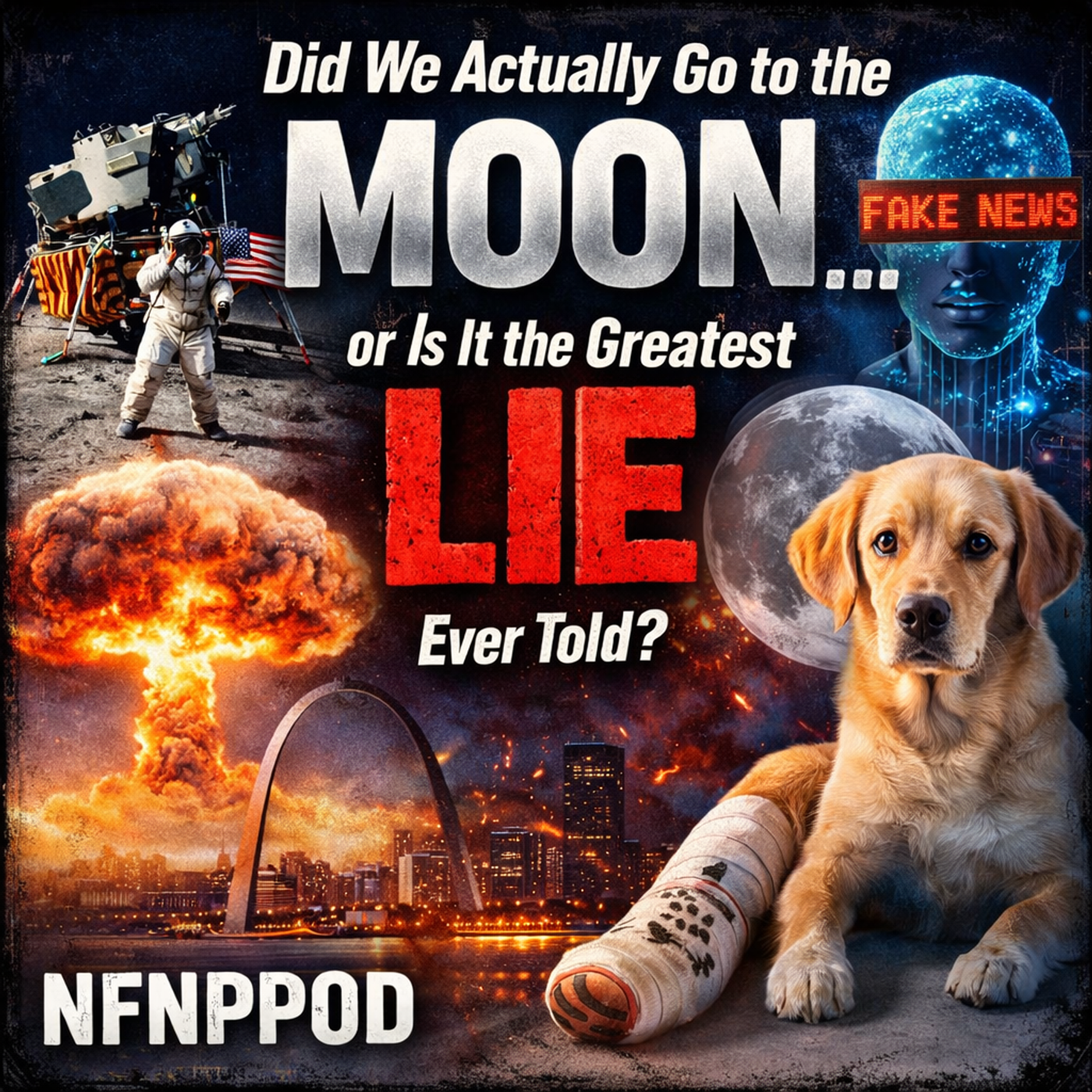
Did We Actually Go to the Moon… or Is It the Greatest Lie Ever Told?
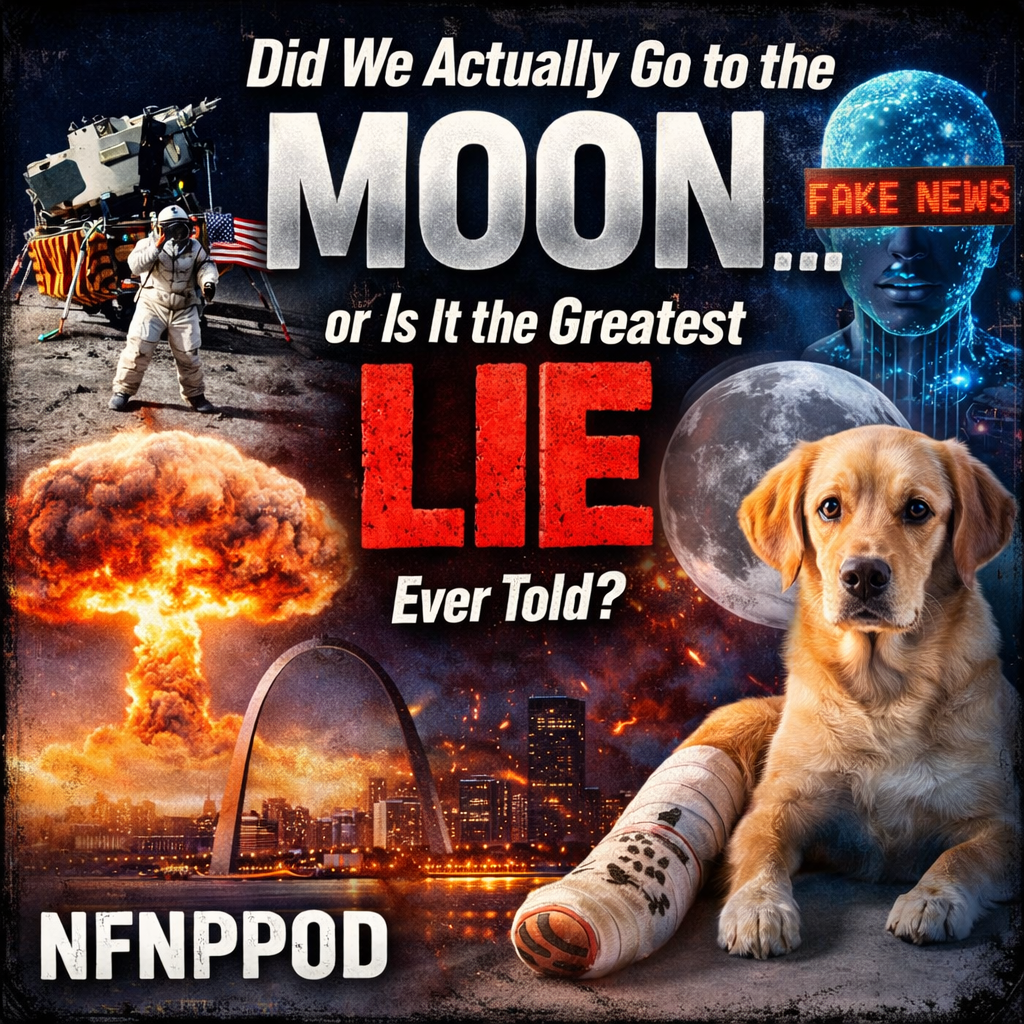
Let’s start with the obvious, this episode had big “two guys at the bar solve the universe” energy from the jump. Nilla was out dealing with an emergency vet situation, so it was just Bright and Duds holding down the fort, which somehow made the whole thing feel even more like a late-night basement summit on the state of civilization. The show opens with dog-owner pain, quickly pivots into gas prices, global conflict, social media brain poison, and then lands exactly where any healthy podcast should: the Moon. Naturally.
The real setup of the episode, though, was information overload, because everybody is drowning in content and nobody trusts any of it anymore. Before they even got to Artemis, the guys spent a big chunk of time talking about social media, AI, bad sourcing, click-farming, and the general reality that the internet has become one giant machine for turning half-truths into confidence. Bright even told the story of AI initially insisting Artemis II had not launched, despite the fact that he literally watched it happen, which is both hilarious and maybe the most 2026 thing ever. The takeaway was clear: AI is useful, but only if you treat it like a tool, not a digital god. Otherwise, you’re just letting the machine hallucinate with confidence while you nod along like an intern in a blazer.
Then the show finally got to the headliner, Artemis II, which is a legitimately huge story even if the internet was too busy arguing about fake moon dirt to notice. Artemis II launched on April 1, 2026, as a crewed lunar flyby and the first human mission beyond low Earth orbit since Apollo 17 in 1972. That alone should have been enough to get people fired up. Instead, the launch became a springboard for the better question: if we’re finally going back, why are so many people still convinced we never went the first time? That’s where the episode really found its sweet spot, not just reciting NASA facts, but using the launch as a gateway drug into the greatest American conspiracy side quest of all time.
The Moon landing conspiracy segment was the heart of the episode, and honestly, it was exactly the kind of ridiculous, funny, and weirdly thoughtful rabbit hole NFNP should own. They went through the classics: the waving flag, the missing stars, the wrong shadows, the Van Allen radiation belt, fake moon rocks, and the old “Kubrick filmed it in a warehouse” chestnut. And the beauty of the segment was that it balanced jokes with actual debunks. The line of the night might have been the basic truth underlying all of it: either the Moon landing was the greatest achievement in human history, or the greatest lie ever told. That is a hell of a premise. It’s also why this topic still works. It’s not just about the Moon. It’s about whether people believe anything anymore.
What made that whole section work was that the guys never played it like smug know-it-alls, they played it like normal people trying to sort out what sounds crazy and what only sounds crazy because the government has the charisma of a DMV pamphlet. Duds was willing to entertain some doubt because the government has lied about plenty of things before, while Bright pushed the practical argument that a hoax that size would have required way too many people to keep their mouths shut forever. That tension made the segment good. It wasn’t “here is the correct answer, peasants.” It was “okay, but if it was fake, how the hell did nobody leak it properly?” That’s more fun, more human, and way more listenable.
The episode’s sneaky second theme was this: people are starving for reality, but they keep feeding themselves algorithms instead. That showed up in the AI conversation, the conspiracy conversation, and even in the social media ranting. The show kept circling the same brutal truth: most people are not informed, they are overstimulated. They are not researching, they are reacting. They are not thinking, they are scrolling. That might be the most accurate diagnosis of modern life the Posse has stumbled into in a while. We do not consume information anymore. We marinate in it until our brains become soup.
Then came Local in the Lou, where New York Mets broadcasters basically looked at downtown St. Louis and decided to describe it like a neutron bomb had gone off. Which, to be fair, is a wild thing to say on a baseball broadcast unless your goal is to get every person in Missouri to throw a Busch Light at the TV. The segment worked because it didn’t just do fake hometown outrage. It admitted the obvious: yes, downtown can look dead at the wrong times. But also, judging downtown STL during a rainy weekday day game is like judging a bar at 9:30 on a Tuesday and declaring the city extinct. That’s not analysis. That’s just New York guy syndrome.
The sharper point in the St. Louis segment was that the city doesn’t really have a people problem so much as a structure problem. The city population has dropped hard over the decades, but the metro is still packed. People didn’t vanish, they spread out. West County, St. Charles, Illinois, everybody still claims St. Louis when it’s convenient and abandons it when the camera points downtown at 2 p.m. The merger talk came up too, because of course it did. And honestly, that part hit. St. Louis has spent so long arguing about city-county merger logic that it sometimes feels like the debate itself has become the municipal identity. The Posse’s point was pretty simple: if your downtown looks empty on national TV, that is not just a vibes issue. That is a branding issue, an economic issue, and eventually a political issue.
The Wheel stayed true to NFNP form by bouncing from sports to books to movies like a drunk man switching tabs at a casino. Bright and Duds got into Dark Matter and Recursion, and this was one of the better late-episode turns because it actually sounded like two guys genuinely excited about something instead of just trying to win a take war. Bright described Dark Matter as initially feeling like Fringe but turning more into Sliders, which is a very specific nerd comparison and exactly the kind of thing this audience lives for. He also said the Dark Matter show mostly holds true to the book, even when it teases deviations, and that Recursion is an even bigger mind-bender that may be too dense to cleanly fit into one movie. In other words: Blake Crouch writes for people who enjoy asking “what the hell is happening?” and then rewarding themselves for surviving the answer.
By the end, the episode had accidentally built a pretty clean worldview: distrust the machine, question the narrative, keep your sense of humor, and maybe don’t let the loudest internet lunatics do all your thinking for you. That’s really what this one was. Beneath the jokes, beneath the Moon talk, beneath the downtown ranting, the whole episode was about trying to stay sane in a world where every platform, every headline, and every algorithm is trying to either manipulate you, depress you, or sell you something. Preferably all three.
Final verdict, this was one of those NFNP episodes that felt loose on purpose and smarter than it looked. Two-man booth, weird topics, zero pretense, and enough Moon-landing paranoia to make your uncle text you at 11:47 p.m. That’s a win.
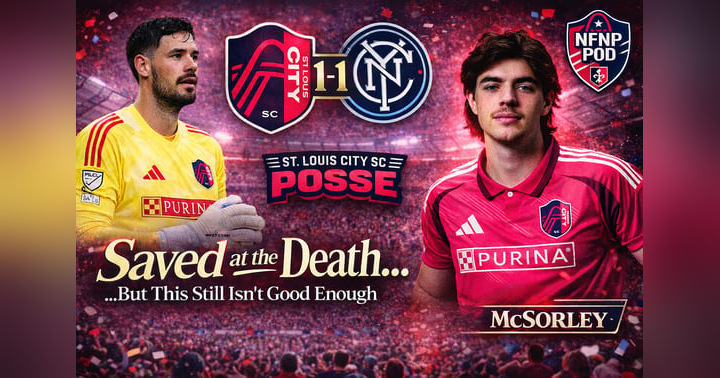
Saved at the Death… But This Still Isn’t Good Enough