
 Spotify
 Youtube Music
 Apple Podcasts
 Amazon Music
 iHeartRadio
 Deezer
 Trump’s $5K Checks vs. The Great American Debt Reset | NFNP 2x31 Part 1
Before all that, Duds reports back from his anniversary stay at the Four Seasons and Gordon Ramsay restaurant, Bright is running on no sleep after another late CITY match, and we may have accidentally discovered the perfect NFNP beer sponsorship: Bright Vibes & Duds Suds.
🎙️ NFNP 2x31 Part 1
Trump’s $5K Checks vs. The Great American Debt Reset
Bright: Yeah, so I just don't necessarily feel like I'm having the best day. I know a couple of weeks ago I was talking about how I just felt blah and you said maybe it's the end of summer blues. Maybe now that's finally catching up. Or it could be the simple fact that I stayed up late last night watching the soccer game and I just didn't get enough sleep. I I don't know what it is. But I just I'm just
Matt: Yeah, that typically puts you in a kind of a crummy mood.
Bright: Yeah, I on a Wednesday night, City was playing late, so they didn't start till nine forty or something like that. The game didn't end till eleven forty five. I didn't even get up to my bed probably until midnight. And then of course the alarm goes off at six fifteen. And I I just
Matt: Okay. Yep, keep going.
Bright: It's just one of those I I feel unmotivated days. And I don't know if that's related to, like I said, lack of sleep or or it it's a Thursday. It's just like, let's get to the weekend already. I got plans this weekend. So maybe that'll help. Yeah, a short week.
Matt: short week, you know. Sometimes a short week is even kinda hard to get like into the swing of things I felt. You know, it's like
Bright: Yeah, definitely be because everything that we normally do on Mondays just gets pushed till Tuesday. So then Tuesday became my
Matt: Right.
Bright: shitty day. That's my my busiest day. Mondays are normally my busiest day. And I'm running meetings and doing all those things. And so that just all fell onto Tuesday. And then right. Yeah. Yeah.
Matt: Your week gets condensed down and yeah, more crap to do and
Bright: I don't know.
Matt: and really you're just thinking, I want to get through these four days and get to the next weekend.
Bright: Yeah, that and that that's probably it. we have plans tomorrow night. we're going to some some charity thing. It's fine. But it's free booze, free food, and we got a babysitter, so that's good. And then my wife and I are going to the soccer game Saturday night. we have overnight babysitters, so we'll probably
Matt: Ooh.
Bright: hang out a little bit more or go out for drinks after the game or something like that, and get a sleep in on Sunday. Yeah,
Matt: I love the overnight babysitter.
Bright: overnight babysitting's the best. There's no
Matt: It is the best.
Bright: doubt about it. And you need you need that every now and then. So I'm almost gonna have to
Matt: We had that last week.
Bright: You guys did, right. And I wanted to I wanted to follow up with that. We we ended our show last week with the tease, if you will, that you guys were going down to stay at the four seasons. I wanted to know how it Yeah. I mean we didn't do a whole lot.
Matt: it went good. Yeah. I mean we didn't do a whole lot. We got down there, you know, we had dinner at seven o'clock, I think was our reservations at the Gordon Ramsey restaurant. So restaurant was great. Yeah, it was well worth it. I mean, it was a little pricey, but you know, it was ex expected. we ended up
Bright: How was the restaurant? Good. It was well worth it. Yeah. Of course. You knew that going into it.
Matt: we didn't do the the five course meal that I wanted to do, because Jenny got a little hesitant when it said on there that it was a beef Wellington that was cooked medium rare. And she asked
Bright: Yeah. Yeah.
Matt: she asked if it was like any, you know, could you change that at all? Go medium. he's like, nope, that's kind of the standard. Gordon's really particular. This is his baby.
Bright: Sure. Yeah.
Matt: So she ended up getting we we you know scratched that idea and she went with
Bright: Just did Alocart.
Matt: the six ounce filet. I ended up getting the beef wellington anyway. And then
Bright: Sure.
Matt: I got the we got the tuna tartar
Bright: love tuna tartar.
Matt: for the for the starter and that was that was gonna be the starter on the the meal the five course meal. So we ended up
Bright: Right. Right.
Matt: getting that. I got the Beef Wellington, which was good. and it was yeah, it was medium or but it was to me it was perfectly fine.
Bright: Yeah. Perfect. Right.
Matt: Jenny got the six ounce fillet and then
Bright: More interruptions. Is it the kids or is it the wife?
Matt: All right. I'll turn it on. It's the book. Gotta get the book on. Yeah.
Bright: The book again, man, I tell ya.
Matt: but she ended up getting a six ounce fillet. She ordered it medium. It came out medium rare anyway.
Bright: Yeah.
Matt: So she ended up getting the same kind of steak she would have gotten. But then
Bright: That's funny.
Matt: what else did we get? We got some carrots, you know, to go with it. they came out with I guess mine came out with some kind of like other vegetable and some mashed potatoes. That was all good.
Bright: Right. Yeah.
Matt: And then we got the it was like a what was it? A toffee
Bright: Mm-hmm.
Matt: almond toffee pudding, but it was kinda like a flan. Like you how
Bright: Yeah.
Matt: flan's like got a a custard type structure.
Bright: Yeah. Is this is this like a an English thing, right? Yeah.
Matt: I guess, yeah. And that came served with a piece of or a scoop of ice cream
Bright: Right.
Matt: and that was delicious. And then they actually brought us a second dessert for the anniversary.
Bright: For your anniversary. Yeah. I've had that happen a couple of times when you're like, We can't eat anymore.
Matt: I know. And the I'm glad we got the toffee pudding though because that was that ended up being better than the dessert they brought.
Bright: Yeah. Yeah.
Matt: and then Jenny was like, You think they would have brought us the second dessert if we wouldn't have ordered dessert? Like I think they probably would have still, but so we just doubled
Bright: Yes. Yeah. Yeah. They w they would have.
Matt: up, you know.
Bright: And yeah, we've had that happen a couple of times and I think I've talked about it even a little bit on the pod when we did when we were in England, we had toffee pudding in England, which pff it's even better over there. but y it's not ice cream. You get like just the cream. Like it's so
Matt: Mm-hmm.
Bright: good. but when we did the what Michelin restaurants, right?
Matt: Mm-hmm.
Bright: And my wife struggles with those because she just she just can't put away that much food. Like a five course
Matt: yeah. Is it always like a five course meal?
Bright: well, sometimes way more than that. I think minimum is seven, eight, ten courses. And
Matt: Seven, eight, nine courses.
Bright: then they bring you an Amoose Bouge over in Europe and you get the extra dessert because you're celebrating an anniversary or something like that. And you're like, Well I don't need two desserts. Right. Ugh
Matt: Right. This much. Usually those courses are smaller though, right? They're not as
Bright: They they are, but when you have ten of it it does trust me, it
Matt: Yeah, it's still it adds up.
Bright: adds up. And when we were in Milan for our our ten year anniversary, we did the the two star Michelin restaurant and then they they had chocolate, which was completely separate. So we had like three desserts 'cause we did like the the chocolate that they do somewhere in there. Then you had the dessert that came with the the meal, the the courses, and then they brought out the the special dessert. So I was like three desserts and somewhere in the middle of that you have a sorbet. they also brought out a cheese. 'Cause that's like that's that's a European dessert. Yeah. I'm
Matt: yeah. That's part of it. Yeah.
Bright: like, my god. That was like a four hour meal.
Matt: Yeah, so the second dessert they gave us was like their chocolate gooey butter cake, which I'm more of a yeah, but I'm more of a traditionalist with the gooey butter. I I like the original. I mean it was
Bright: that sounds good. Traditional. Sure. Yeah.
Matt: fine. It was just kind of overly chocolatey, you know. So it was good, but the the toffee pudding was way better. So the only thing
Bright: Yeah. Yeah. So it was good. All right. And you get some
Matt: I missed out on was the there was like a mushroom risotto that would would have came with the the four or five
Bright: Right.
Matt: course meal. Missed out on that, but other than that I pretty much got the same thing we would have gotten.
Bright: Yeah. Nice. And you and you liked it. You had a good seat, a good yeah,
Matt: So it was good.
Bright: good view, good good ambiance.
Matt: Had a had a glass of rye whiskey, some knob creek rye. Yeah. Yeah, walked outside
Bright: Nice. Yeah, good. So some good good drinks.
Matt: afterwards. It was kinda it cooled off a little bit, you know,
Bright: Yeah.
Matt: at night. So it's right by the arch. You know, you could see the river, river right there. So
Bright: Right. Right. Yeah.
Matt: it was all pretty nice. they were doing a drone show over in I think probably Granite City you could see.
Bright: Nice.
Matt: going off in the distance. So it was all kind of nice. So then next morning, we went back and had breakfast, same restaurant.
Bright: Right.
Matt: And I I gotta say, I think the breakfast was actually even better than than the dinner. Yeah, I was I was pretty impressed. I got I got the
Bright: Really? Yeah. Yeah. I was pretty impressed. Good. Well sometimes a good breakfast like that when you're when you're at a restaurant you're
Matt: Yeah.
Bright: not just cooking it yourself, like, i it it could be over the top.
Matt: They did a I got the salmon eggs Benedict. that was really good. Came out
Bright: Always a good choice.
Matt: yeah, what did Jenny get? can't remember what she got exactly. But they both came with like these potato like home fries. They were like big hunks of potato that they deep fried with some crushed up bacon. So that was that was all really good. Yeah, big fan. I love
Bright: Like big hunks of potato that fried yeah crushed up bacon. Nice. Nice. Yeah. Big fan.
Matt: breakfast, but I think it's my favorite meal now.
Bright: Yeah, yeah, yeah. You and your eggs and and sausage and all that. Yeah, yeah. Can't go wrong. Yeah. I still I
Matt: Yeah, I just love it. And I gotta eat in the morning now. I gotta eat early, you know, it's like I wake up I I'm hungry.
Bright: still don't eat until noon. I still yep,
Matt: I know. You do that intermittent fasting?
Bright: yep. Just cuts down on the calories just to make sure I'm not overdoing the calorie intake. That's right.
Matt: Yeah. Yeah, they each their own.
Bright: you did did you see any famous people? no. No. No. Like about famous people.
Matt: no. No. No. We were probably the most famous people there.
Bright: The NFNP podcasters. Hey, don't I know you? Aren't you that
Matt: Yeah. Yeah.
Bright: that barely recognizable podcast that does local in the loo? Right.
Matt: Yeah. Yep.
Bright: Yeah. Hey, you never know. One of these days we are gonna get recognized and you're gonna be like, wait,
Matt: Mm.
Bright: what? People actually listen to this thing? But Yeah, no.
Matt: Yeah, I don't know if I would like that. Don't come don't talk to me.
Bright: Well you'd you'd be easier to recognize with the beard and everything.
Matt: Mm but possibly, yeah. Maybe. I don't know.
Bright: Yeah, yeah. Shave that and that's a different story. Alright, well what about like the room and everything? Nice room. Did you guys do anything else?
Matt: Yeah, room was good. They actually upgraded us. I just got like a standard room 'cause they were expensive, but they I guess
Bright: Right. Yeah, sure.
Matt: they upgraded us for I don't think they were probably at capacity anyway, you know,
Bright: Right.
Matt: so they probably upgraded most people and we got an arch view. So
Bright: Right.
Matt: it was nice view anyway. See the river, you know.
Bright: Yeah, yeah.
Matt: But other than that, we were kind of talking like for the money, you know. Seems kind of just like a standard hotel. I mean it was a nice room, don't get me wrong. Nice bathroom, big bathroom.
Bright: Yeah. Yeah. I th I think it's definitely it's about the s service, the the quality levels and and anything. And it's just sure. Absolutely. Yeah.
Matt: Sure. If you're gonna use the spa and they got the nice restaurant and they have like a bunch of shops in there too. So
Bright: It's it's just more about that status of people that If they go on any trip, that's where they stay. And that's why I kinda ask, like, do
Matt: Yeah, staying at nice places.
Bright: you see anybody famous? Because if you have like we just had the A C D C Foo Fighters concert down at the Dome. Now that was on Tuesday night, so you guys are probably a little early for them, but where do you think they stayed? Yeah.
Matt: Yeah, probably someplace like that, right?
Bright: Some place. That's where they stayed. There's no other
Matt: Ha ha
Bright: like really nice especially downtown hotels. That's that's it. It's
Matt: That's probably the nicest one, right?
Bright: yeah, it's the four seasons. And of course that's where famous people with money wanna stay. They just assume like that we'll stay at the four seasons, right? So Yeah, exactly. Exactly.
Matt: Yeah, you know what you're getting there, right? 'Cause even other nice hotels like Hilton brands and Marriott's, like, they're kinda hit and miss. You could go to one that's not really that great, but I think all the four seasons are probably up to a certain standard, you know.
Bright: It's character. Sure, absolutely. And that's the thing like the Hilton, the Marriott's, they all have The they have a lot of different brands and each brand
Matt: Mm-hmm.
Bright: is a little bit different. So to the average consumer, you might not always recognize you just see the name behind it and you're like, we're staying at the Hilton. Well you're staying at the the Hilton, the Double Tree, the Hampton Inn what what is it? They all they're all different. Yes. So yeah. Well
Matt: Garden. I got a bunch.
Bright: well good. I'm glad you guys had a nice anniversary and then it's it's back to reality. But yeah, so we're we're kind of looking forward to that. I feel like this'll kind of be even though we'll have the kids intermittent. We'll have a little bit of a break and and even Sunday we have the morning and then it's grandparents' day at school on a Sunday, which is weird. So we'll kinda go meet there. So yeah, for for us. all right. Well maybe it's a
Matt: Is that this weekend? Yeah, I think we got that going on this weekend too. Same thing.
Bright: maybe it's a thing. So so yeah, so the grandparents are gonna bring there and and we'll just kind of meet towards the end of it, pick the kids up, and then you only have like half a day left after that. So
Matt: I love
Bright: Yeah. So it should be a good weekend and and honestly I was I was looking forward to the podcasting. just in the sense that I'm like, yeah, this might cheer me up a little bit. Just getting on and and talking bullshit. So far so good. So far so
Matt: So far so good, right?
Bright: good. Plus I get to have a beer and I forgot to call out this beer last time. and they're not an official sponsor yet, but I feel like I have to ask them. It's the the Four Hands Bright Vibes.
Matt: I mean, who better to sponsor it?
Bright: it's it's too perfect. It's too perfect. I was like, I gotta I gotta call up. I haven't actually solicited anybody yet, and we might have the listener numbers that we could get small plugs. I don't know. that is perfect.
Matt: If they could come out with a duds suds, that'd be good too. Then we could
Bright: Bright vibes and dud suds. that's
Matt: Yeah.
Bright: too perfect actually. You've thought about this before. I did that
Matt: I just it just came to me.
Bright: together before. Nice, nice, nice, nice. All right. Let's get on to the the main topic. and I've I got a couple of different stories that maybe you can lead the way. But the main topic, the main thing I want to talk about, and it's a little bit different this week, is the five thousand dollar Trump checks,
Matt: yeah.
Bright: but not just that. And so we could talk a little bit about that. But I put together this quote unquote thought experiment. of what
Matt: Okay.
Bright: would happen if. And it kinda is like a a five year like this is what would probably happen if we did as a government XYZ.
Matt: Okay.
Bright: So I got that. I've got the AI doomsday information. I've got
Matt: I know that that five thousand dollars, what is it per adult, he said?
Bright: Yes. But yeah, five thousand dollars.
Matt: So the five thousand dollars per adult I think is like comes out to like one point three trillion dollars or something crazy.
Bright: All right, well let's let's just do that first 'cause I got it here and Yeah, so one point three five trillion dollars if he gave it truly to every American adult, which is what he said in his speech last night. And I didn't watch all of it, I watched some of it. And I do think one, a couple of interesting things. We're rolling into the midterms here, and it ain't looking good for the Republicans. And traditionally
Matt: Mm-hmm.
Bright: it it never really works out for the party that's in power. When it was Obama, the Republicans won.
Matt: Right. Especially when they haven't really done anything.
Bright: Well, right, and I feel like y especially with Trump, is like you come in, you win the the Senate, you win the House, and then we we don't really do anything. Nothing really got done, I don't think. I mean it is the status quo. And and and
Matt: feel like that's the status quo of the Republicans. Every time they get in there they don't do it.
Bright: And Trump did some stuff, but all of his stuff is executive order, so it doesn't have any l stay power, right? As soon as there's an so that doesn't really count. Like the border is great for now and and there were other things that yeah, it's all it's all great. Right. So
Matt: Yeah, but you lose the presidency, that could change overnight.
Bright: you need congressional action to actually do anything, and we haven't really been able to to get a lot of the stuff over the finish line. So it's like what have they really done? So
Matt: They can't even pass the Clarity Act, which I feel like they have, you know, bipartisan you know approval on that.
Bright: Yeah, well that's that's what's so weird is even some of the things that you have bipartisan approval on, they won't actually vote on until other things get worked out. They're like, Yeah, yeah, we all agree on this, but we're gonna table that until and then you have different parties and people are holding everybody hostage. And now I'm like, We're two years into the Trump presidency with Senate and the House, and we didn't get anything done. It's exactly what happened last time he was president. And then he's gonna lose the midterms, and then he's not gonna get anything done the last two years. He'll probably get impeached a couple more times. And I'm just like, this is stupid guys, it's stupid. It is. It's very frustrating.
Matt: It is it's very frustrating to sit back and watch all this unfold, you know.
Bright: Yes. Yeah. Yeah, definitely. And And so yeah, so then they they come out and they're doing this midterm convention, which is again has never been done before. And I almost feel like it's a little bit of a Hail Mary. Like, let's see if we can get a little bit of extra momentum and more TV coverage and get all of our people together and and start to build something. And we'll see, maybe it works. But then he comes out last night and he promises five thousand dollars to every American adult, which on first first look at it, I'm like, all right, well I could use five thousand dollars plus my wife. Ten thousand dollars? Yeah, I I could do something with that. But do we really want it? Is it worth it?
Matt: Well does it really help you if everybody gets five thousand dollars, does that
Bright: Well
Matt: really get you five thousand dollars? Doesn't it just make everything go up in price?
Bright: No. Yes. And that's exactly what we saw with COVID, right? So I think that that becomes a little bit of the concern. Why stop at five dollars?
Matt: Why don't we just give everybody a million dollars? Like why stop at five thousand?
Bright: No. So
Matt: No, seriously, why would you stop at five thousand? If you can give five thousand, just give a million. You know, why not? Just print the money and hand
Bright: Yeah. Print.
Matt: it out. Let's just collapse the dollar and be done with it.
Bright: Sure. Well that as as we've talked about before, the money will become completely worthless at that point. It c we could probably sustain five thousand dollars, but right, you're gonna see inflation continue to rise and eventually we'll be right back into the same problem we're in now. You might get a short reprieve because people are suddenly cash rich. And what do you do? It's the same thing happened in COVID. You get an extra five or
Matt: They just spend it.
Bright: ten thousand dollars. Most people will just go out and spend it.
Matt: Right, which I think is also part of the plan. Spur the economy more.
Bright: It is part of the plan. You give the boost to the economy and that can give a boost. Then companies are like, Well, we need to hire more people to keep the momentum. You hire more people, whatever. Some of that is is fine in the short run, but then the inflation aspect of it ends up killing all that. And you're like, Well, I just accepted a job for a hundred and thirty thousand dollars. That's a big improvement off of what I was making. but now that hundred and thirty thousand dollars is actually the same five years later as what you were making before. It's actually a hundred and ten thousand dollars. Or worse, right? And then you're like, well, wait a minute, I'm in a worse spot
Matt: It's just a yeah.
Bright: because everything costs more. I'm actually making less money. So
Matt: It's a debacle. It's not an answer
Bright: It's it's a debacle.
Matt: to any problems. I mean, it's just silly. At this
Bright: All right.
Matt: point, it it seems like like you said, a Hail Mary and it's not gonna I don't think it's gonna work.
Bright: Well, and before we get into this thought experiment that I put together, and it's a little bit of a callback to to past episodes, but he said every American And in the past it's it's usually capped at people making less than four hundred thousand dollars or families making less than four hundred thousand dollars. I don't know why that's the magic number. He didn't say that last
Matt: So not every American.
Bright: night. Last night he said every American and he only said if Republicans win the House and the Senate. So again, that almost sounds like a little bit of a a bribe. Now the Democrats the Democrats
Matt: A bit, yeah.
Bright: did it too. The Democrats said we'll wipe out student loan debts. Well then they that was that was specifically employed to get all the young people and the young vote and they already knew they had the the liberal vote, but now if we get the kids too, that'll push them over the edge. And it did.
Matt: He should've just said anybody who votes for a Republican and can prove that they did will get five thousand dollars. Just come out and say it. I know I wouldn't think so.
Bright: That can't be legal, right? And even this, even this, I feel like is is gray area. And I also felt like the student loan debt is gray area. I was like, this is all gonna happen now for every single election where somebody's gonna come out, they're gonna promise something that they can't deliver, and it'll feel like student council circa nineteen ninety-eight.
Matt: Yeah. And will it actually happen? Because he promised a bunch of these doge refunds too and I haven't seen that money.
Bright: Well, so that's what people are saying. Not only the Doge re refunds, the initial tariff refunds, he ended
Matt: Right.
Bright: up giving money to the the military, seventeen seventy six dollars, I think, for military members, especially those that were displaced by
Matt: tariffs, all the tariffs did was benefit the big corporations. They got to
Bright: No, right.
Matt: they got to add the tariff cost to everything that they sold. And then they got refunded from the government for all that and they didn't have to send that out to anybody. So they got paid twice on the tariffs.
Bright: Yeah. And I'm actually a proponent for tariffs. I do think
Matt: Well yeah, if they if they are gonna be used to pay the ta like pay the tax, but that's not what they were used for. They didn't do that. They gave it all back. They just gave it to the big corporations.
Bright: Right. Right. Sure. Yeah, well that a lot of that is due yeah, due to the Supreme Court. So that that didn't help. And now we're not earning we're not
Matt: It's a train wreck.
Bright: earning enough money from the tariffs to pay $1.35 trillion. I think it would have to take it would have to be eight years worth of tariff money to pay the one point three five. And again, we know as soon as the Democrats come into power, they're gonna wipe out the tariffs. Now I'm not saying that's a good thing or a bad thing. It's just what they will do. So then if you hand out five thousand dollars today. How y how are you have to continue to pay for that somehow? And then the the Democrats are gonna wipe out the tariffs. Well I
Matt: Do you though? I mean, can't you just print print the money?
Bright: guess that's the bigger question. All right. Well here's the thought experiment. That's that's true.
Matt: When you have a printing machine, you can just print monopoly money and hand it out to everybody.
Bright: And they really just add it onto the ledger, right? Like they do really just
Matt: Yeah, who cares? Another one and a half trillion.
Bright: That let's just add an extra zero to our total whatever. I don't know. All
Matt: Yeah.
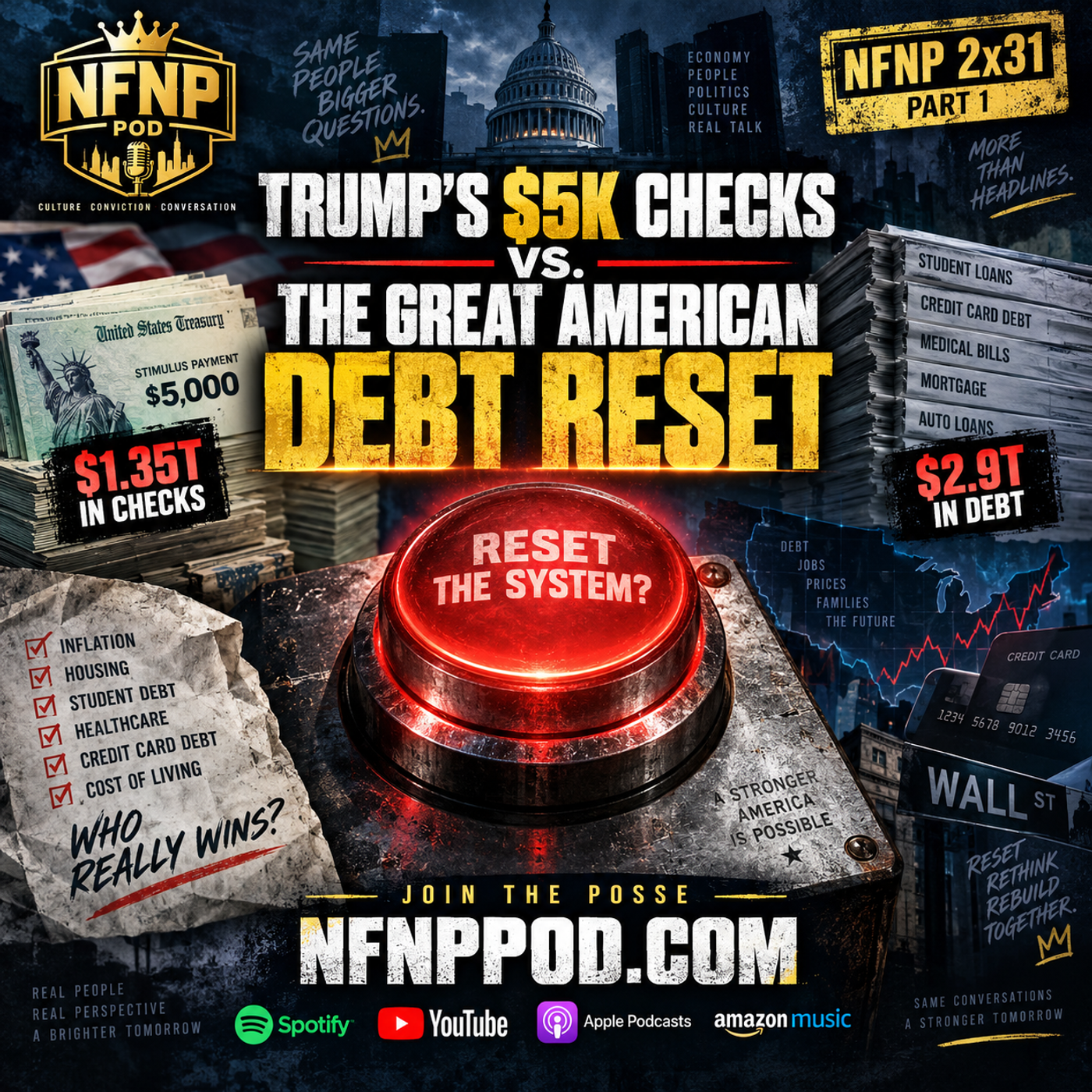
Bright: right. So what if America could hit a financial reset button and wipe out roughly two point nine trillion in credit card and student loan debt overnight? Would that permanently free millions of Americans, boost spending and mobility, and reshape the economy? Or would we simply recreate the same debt a few years later because we never fix the system it created? So the idea. The idea is that we talked about this a couple of episodes ago. So it's $1.35 trillion if you're gonna give every American $5,000. Credit card debt is $1.26 trillion, and student loan debt is $1.65 trillion. So I also find it high what's the word? hypocritical that Republicans were so pissed off about the student loans, which I wasn't necessarily a proponent of, but now it's it's actually
Matt: Sure. I mean it's all handouts.
Bright: this almost the same.
Matt: Yeah, it's all a handout. It's just the selected the student loans were more of a selective handout, you know, than a five thousand across the board. That's to everybody.
Bright: Yeah, but see that's the thing, like and that's kinda what led me down this path, is five thousand dollars isn't the same to everybody, right? So people
Matt: Right. Yeah, for a person making fifty thousand that's a lot. For somebody making five hundred, it's not so much.
Bright: Yes. Right. Exactly. For us, we're we're probably in that middle area, like, hey, I I could use it. It certainly would help. But like, do I need it? Am I gonna am I gonna starve without it? Well For sure. A daycare daycare
Matt: That's probably a couple of house payments for some or and some it's probably barely one.
Bright: for my son for the year, basically. almost. Not even not even, but but close. Well, sure.
Matt: That's if the inflation doesn't hit. Because this is a a five thousand dollars to everybody would be an expansion of the broad money supply, you know. So
Bright: Yeah. Right.
Matt: that is injection c straight to inflation. Like that will inflate the dollars. It there's no
Bright: Mm. Yes, and we we
Matt: ifs, ands, or buts about it. Like that's gonna happen.
Bright: And it happened. We saw it happen with COVID. It's already been done. So we know how this works out. But okay. So combined, if you just took credit cards and student loans, you'd be at almost three trillion dollars. So I know that's a little bit more than the 1.35 that we're talking here. But but the the experiment is there nonetheless. Okay, so here's the rules of said thought experiment. Eleven fifty nine tonight, America owes two point nine one four trillion dollars across credit cards and student loans. At twelve AM, every balance becomes zero dollars. So that that's the promise that let's say the Republicans come up with. Seems crazy. And how they win the midterm elections. And they're wipe it out. Nobody receives a giant check. So instead of getting five thousand dollars or more. Just in your bank account, it's more about the the debt relief. Nobody's mortgage
Matt: Okay.
Bright: or car loans disappear. Existing credit lenders are compensated. So the government pays those bills. They take that one point two trillion dollars and they pay pay at the credit card companies. So they make their
Matt: Okay.
Bright: money, right? Federal student loans are canceled. Future borrowing is still legal. Credit cards still exist. Colleges still exist. No other economic rules change overnight. So it's more or less the idea of this is what happens to the world if we if we just wipe out three trillion dollars in consumer and student loan debt.
Matt: I would say less than ten years it'll be back up to where it is.
Bright: All right. Well, this is this is what I got, and I think this gives us the most plausible version of what the actual reset might look like. So you ready?
Matt: Okay.
Bright: I'm just gonna run down the list.
Matt: Per chat GPT.
Bright: Yeah, yes. Open AI. That's right. That's right. All right. So roughly, let's see, the 2.914 trillion of household liabilities disappear overnight. Forty-three million federal student loan borrowers are suddenly staring at zero dollar balances. Every revolving credit card balance goes to zero. Minimum payments are gone. Interest stops accumulating on those balances. So a family paying $500 a month toward cards, $400 a month toward student loans, and let's be honest, that's probably low. Suddenly has $900 of monthly cash flow back, which is different than just a big lump sum. Now you've you've got cash flow. But their checking account has not increased by a dollar. This is not a $2.9 trillion shopping spree deposited into bank accounts. It is the elimination of future required payments. So the r the question right off the bat. Yeah, I mean it's definitely a bailout. It's a bailout of of the consumer. The debt holders,
Matt: Basically a bailout. Basically a bailout of the of the first yes, the debt holders, yeah.
Bright: exactly. Yeah, instead of the big banks. We get the bailout this time. So you wake up completely debt free tomorrow. What's the first thing you do? Do you do something? You gotta go buy it? Well what do you you said what? Go
Matt: Ooh yeah, you gotta go buy something. With that with that cash flow, you got nine hundred dollars in cash flow, you gotta go spend it. It's burning a hole in your pocket.
Bright: buy a new T V or something? You don't die.
Matt: yeah, rack up some debt. Get a new credit card. Gotta pump those numbers back up.
Bright: Well let's see. So eight A. day one. Credit card utilization ratios plunge for anyone that was carrying balances. Obviously they they're not utilizing their their limits, right?
Matt: no, credit scores are gonna go down.
Bright: it's possible. Debt to income ratios improve, obviously. People who had been budgeting hundreds or or even thousands per month towards debt suddenly need a new plan for that money. They are not bankrupt because the banks.
Matt: What am I gonna do with all this?
Bright: Right. Yeah. W yeah. So what about the banks? The banks themselves, they're not bankrupts because in this scenario, the principal was compensated. So they were given
Matt: Mm-hmm.
Bright: money, but they'd lost out on on the biggest asset that they had, and that was years of future
Matt: Right.
Bright: credit card interest payments, right? So now they they yeah, they have to
Matt: Sure. Yeah, they actually don't want that.
Bright: rethink this how are they gonna make money? Right? 'Cause kinda like Mark said when he was on, it was all about feeding the machine. And anybody
Matt: Mm-hmm.
Bright: that works for any company is how can we make more money than we did last year, right? And that's certainly true for the banks. So yeah, they got this big lump sum payment, which kind of could be similar in in our scenario if Trump gave our gave us ten thousand dollars. Hey, great, but that's not actually helping me in the long run. I need to make more money. Right? So that's what the banks are thinking here too. Student loan service Their core business has changed overnight. Millions of accounts no longer require met require payment processing, collections, delinquency management, repayment administration, layoffs pretty much happen right away. So a lot of people, anybody that's that's working for a student loan servicer, they've probably
Matt: You're done.
Bright: lost their job, right?
Matt: I wonder you you know, you hit on a very important point that like these credit card companies, the debt is their their asset.
Bright: Yes.
Matt: So if you wiped out all the credit card debt, do those companies hold debt? Do those credit card companies hold any debt? Because if they do, how are they, like you said, how are they going to make any profit now and any income? Because if they can't, how do they
Bright: Yeah, I mean that's a good question.
Matt: pay their debt back? Because they probably owe debt to another bank. You know, potentially.
Bright: Yeah, if they owe debt, it it'd kinda be like that. So they're gonna get this big lump sum payment. So it's kinda like if you get ten thousand dollars and you have fifteen thousand dollars in credit card debt, well, one, are you gonna take that full ten thousand and put it towards that credit card debt? Probably not. Not that's not what most people do. They might put a little bit to it, but they also want money in their pocket. And if you owe fifteen thousand dollars, ten thousand ain't gonna cut it. Now if you owe five thousand,
Matt: Mm-hmm.
Bright: like, all right, you now you pay off that and you still got some cash. So I guess that depends. If these credit card companies, I don't know actually. I'm assuming they do hold debt. Otherwise they yeah.
Matt: I would assume so too. And I think that they're getting the money from the interest and all that and the fees to service that debt to probably another entity. And if they stop being able to do that, then they would default on that debt. Right? And then you have a snowball effect a snowball effect
Bright: Sure. Yes. Yes. Sure. So I didn't even get into that. It it could be.
Matt: of banks, you know, owing money to other banks
Bright: Yeah.
Matt: and then them not being able to pay that. You know, it's sidebar. I'm listening to a new book. on it's called The Creature from Jekyll Island. Have you heard of it?
Bright: I don't think so.
Matt: So it's all about the f founding and structure of the Federal Reserve. That
Bright: Okay.
Matt: was all that was done on this small island off the coast of Georgia called Jekyll Island back in the early nineteen hundreds, right?
Bright: Yeah.
Matt: these big bankers that were down there. Warburg and sh I think it was JP Morgan and those guys, you know, that
Bright: Yeah, right.
Matt: founded the Federal Reserve essentially. But they were talking about in I'm only like couple chapters into the books, pretty interesting. I highly recommend it.
Bright: Okay.
Matt: they talk about banks be you know, owing other banks money. And
Bright: Sure.
Matt: that's another way of banks going bankrupt and defaulting is like when they can't pay the debt to these other banks. There was a certain name for it. I can't remember what that's called. It's not, you know, default, but it was another word. there's a certain certain
Bright: Mm-hmm.
Matt: name for that. When a bank can't pay another bank the debt that they owe and they end up going bankrupt. So then that bank kinda absorbs that bank or,
Bright: Yep. Yep.
Matt: you know, whatever. But yeah, kinda interesting then. I think that would probably have an effect if you just wiped out all of this. 'Cause how else are they gonna make money now,
Bright: Yeah.
Matt: these credit card companies?
Bright: Right. Well, I get into it a little bit more, but I think that's a good point, right? That they do the banks themselves owe debt and and you would probably see a snowball effect. So I do have some snowball effects in this and and then the question then becomes how are they gonna make money? We will get to that. So we're still on day one, right? what about no yeah, that's
Matt: Still at nine AM.
Bright: right. What about debt collectors? Credit card collection evaporates, right? Student loan collection falls dramatically. So it's one of those first industries that are gonna completely be destroyed because you don't you're not gonna need to go out there and collect that debt. I guess there's still gonna be medical debts and and things like that, but but yeah, so there's there would be jobs lost. No, no doubt,
Matt: sure.
Bright: right? All right. So now we're in the first week. And of course consumers think, hey, we're debt free. So that consumer confidence definitely jumps. So what does that mean? yeah, for sure. So people feel richer, not because their paycheck changed, but because their monthly obligations did. So that probably means that, you said it earlier, spending's going to increase. So restaurants, travel, Amazon purchases, electronics, furniture, home improvement, cars, entertainment, child care, and then savings. People will save.
Matt: Everything.
Bright: Yeah. People will people will invest.
Matt: Some. Couple couple bucks.
Bright: Yeah. Some people will save and and and invest, but there is
Matt: Hopefully they take that five grand and put it right into Bitcoin, 'cause that's probably what I would do if I got it.
Bright: Well, I w we were gonna get to that. So there is evidence that debt payments affect consumption. So when the federal student loan payment resumed after the pandemic pause, Federal Reserve researchers estimated the restarted the restart reduced consumer spending by about eighty billion dollars annually. Just because people had they had other obligations. All of a sudden they got it they got that student loan debt that they hadn't had in five years. They had to start paying
Matt: Yeah.
Bright: that again, they're they're gonna stop spending that on other things.
Matt: Yeah, if they want to be, you know, a a good a good citizen, pay back their debts.
Bright: Sure, right. That's right. Yes. some borrowers, of course, would do the same, so a lot of people would get a lot more conservative. You would see aggressive savers. People people that would not want to carry a credit card balance ever again. That would happen. Which Yes.
Matt: Yeah, you would hope that people that you know, if they get a second chance, they would okay, I'm gonna buckle down, not gonna actually rack up any more debt. But
Bright: Right. Yeah.
Matt: I don't know, I I don't see that happening. I feel like people that
Bright: Not not to the extent that it should.
Matt: yeah, people that get into trouble, you know, that have a lot of credit card debt, it's even if they
Bright: They have bad spending habits.
Matt: they if they a lot of the time it's not the fact that they can't afford to pay off the debt, it's because they're spending too much.
Bright: Yeah, right.
Matt: You know, I obviously it can't snowball out of control, and then People declare bankruptcy. And you start over that way.
Bright: Yeah, and there there's emergencies too. So so obviously you don't plan
Matt: Sure.
Bright: on that and you're like, I can carry a little bit of credit card debt. No no big deal. Then you have a medical emergency or a car emergency or you lose your job or things like that and you're like, well I need this just I'll just just until I get on my feet. And then before you know it,
Matt: Mm-hmm.
Bright: you can never get out from under that minimum payment and and then you're stuck.
Matt: Yeah, you know, I just I need this Starbucks every day to get on my feet again.
Bright: Well, that's a different story, but but anyhow, discretionary spending would certainly get a noticeable lift. All right, what about week two? This is when Wall Street really realizes what just happened. Credit card companies have a problem. Their customers suddenly owe them nothing. So what does Capital One do? They probably s
Matt: Fires, everybody.
Bright: they set up huge sign up bonuses. Right? Get our card,
Matt: yeah.
Bright: work with us, bank with us, and you and give you give a bonus, right? Zero product zero percent introductory offers. Cashback promotions. Yeah. Balance transfer
Matt: Love those. Love those.
Bright: campaigns, they they don't really matter anymore. So that's something
Matt: Gone. Yeah.
Bright: something that they relied on to get customers. They don't need that anymore. Aggressive attempts to get people swiping again. So new products to design that were designed to rebuild loan balances.
Matt: See isn't funny? I mean the whole system is based off getting people in debt. Which everybody
Bright: Yeah. Yeah. Which is
Matt: will tell you you don't wanna be in debt. You don't wanna be in debt. But then if as soon as you as soon
Bright: No. Listen to Dave Ramsey on that sense.
Matt: as you wipe out this debt, what are they gonna try and do? Yeah, we gotta get more customers, we've gotta get them in debt.
Bright: Gotta yes. Gotta get back gotta get back into into the store, swiping the card, you getting the rewards, doing all those things. The big thing now though you're supposed to pay it off every five. Right. Yeah, yeah, yeah. And and that's what I mean. Eventually
Matt: yeah, you're supposed to pay it off every month. You know, but if you miss, you know, that's okay. We can carry it carry that debt for a little while.
Bright: something pops up and you don't pay off that minimum payment and and see your point earlier, it snowballs. So these lenders though, they have a problem. They know that the federal government can come in and take it all away at any time. So they net
Matt: What do you mean?
Bright: well, if they did it once, they wiped out credit card debt
Matt: yeah.
Bright: once, they know that the government could come in and do it again. So they have to protect themselves this time. So yeah, they might come out with all this stuff, but they're also gonna have more higher risk premiums, tighter underwriting, st lower credit limits, higher annual fees. Gets guaranteed money.
Matt: Yeah, because I mean all those introductory offers and stuff cost some money in the beginning, you know. That's to try to rope people in and then make
Bright: R sure. Yeah. Yeah.
Matt: money off the interest or the actually I think a lot of the money's made off of just every transaction, you know, it's like three percent or something. So they want
Bright: Mm. Mm. Absolutely.
Matt: you to just swipe it. They don't care if you pay it off, they just want you to keep swiping the card. Which
Bright: Exactly. Yep, that's true.
Matt: I think a lot of people would still do. I don't think people are gonna stop using a credit card.
Bright: Well using a credit card. No, you s you do it on on the simple fact that it's convenient and you're protected. Right? So hardly carry cat and Yeah, sure. Yeah. Now that's that's not to say
Matt: Yeah, most people hardly carry cash anymore. I mean, that's a I don't know what the percentage is, you should probably look that up. How much percentages of transactions are done with credit cards over cash or even debit cards anymore? It's gotta be most of them.
Bright: Well and it's quite possible that that cash won't even be an an option years from now. Everything will be controlled by AI and yeah, and it'll have to be digital.
Matt: Yeah. If the government has their their way.
Bright: Yeah, for sure. And and it's quite possible and this they talk about this in Mr. Robot, which I've talked about before, but it's possible that the US dollar becomes a cryptocurrency, if you will, in some fashion. Right?
Matt: Yeah, they were talking about that. Is stablecoin, you know. That's what they
Bright: Yeah, right. Yeah. So
Matt: want to do. They'd I think we talked about that central bank digital currency. We you don't want that. We don't want that.
Bright: Right. Yeah, I think we did. No, no. All right. so what about one month in? This is when America starts making different life decisions. So some people will leave their jobs. They either don't need anymore because they were working the job to sustain their debt.
Matt: Pay the debt.
Bright: Right. Or they hate their job and now they don't feel obligated to work it anymore because again, they don't they don't have all that that debt anymore. So thirty thousand hour credit right now. Right, exactly. Yeah. Without that
Matt: I got a thirty thousand dollar credit limit available again. I'm just gonna I'm gonna quit so I can I'll use this until I need a job.
Bright: Without that big debt obligation, people are gonna change careers. They're gonna quit working overtime. They're gonna accept a lower paying job, right?
Matt: Quit that second job. Yeah.
Bright: They're not gonna need to work the second paying job. Yeah, they'll take a lower paying job that maybe offers more flexibility or isn't as demanding. Someone might start a new business. They might go part-time to raise kids. So you'll see people leaving the workforce. And some people might just tell their boss to F off. I don't need this job anymore, right? So yeah. Research
Matt: Good for them. I I applaud you.
Bright: Yes. Research has found that relieved borrowers became more geographically mobile and more likely to change jobs and eventually earn more. So that's the nice thing. So they'll change jobs and they'll it'll eventually work out for them and
Matt: Mm-hmm.
Bright: and we'll see upward mobility in in income. So debt clearly changes behavior, but removing it doesn't make everybody react the same way, obviously. We'll have savers, we'll have spenders, we'll have people that quit their job, people that open businesses, people that just keep doing the status quo.
Matt: So so far, what do we think? Is this a positive thing?
Bright: So far, I think it sounds positive for for the everyday American, yes. But let's I think I think this is where it gets it starts to change. All
Matt: Sounds like it so far. Let's see. Might take a turn for the worse. Let's see.
Bright: right. Somewhere around the month two to three. This is the shit. Houses are even more expensive. So millions of borrowers now have lower monthly debt obligations or or hardly any debt obligations. There's still other debt out there besides credit cards and student loans, obviously. but yes.
Matt: And there's more money to spend.
Bright: So better debt to income ratios, lower credit card utilization, greater ability to save for a down payment, greater ability to qualify for loans, and housing is demand is going to rise. But Obviously we didn't magically build more houses at that time that the credit cards all went to zero. So the markets will have a constrained supply. So more buyers will compit Yeah. With buyers. Yeah. Right. Three trillion. Yeah. Yeah. So prices are gonna go up, rents are gonna
Matt: You've essentially flooded the market with one point three or three trillion dollars, whatever you said. Yes. Yeah. What what do you think is gonna happen?
Bright: go up. yeah. It's the same
Matt: Yeah, it has to.
Bright: It will. And it's the same problem with cars. There'll be more financing capacity, fixed short run vehicle supply, and that'll all equal potential upward price pressure. So the great irony is we made people more able to afford houses and cars and then possibly made houses and cars more expensive. Which again is what we saw happen after COVID.
Matt: So what that's what would happen.
Bright: Yeah. And especially with used cars. Remember after COVID how expensive used cars were?
Matt: It's because the debt you can't just wipe it out. If you wipe it out with new money, you're you're just flooding the market with these new dollars, right? You
Bright: Yeah.
Matt: need to use the dollars, like if I give you a dollar, right, and I hold that one dollar of debt, right? If you don't if you just create more money to pay me back, well that's not gonna that's not gonna help anything. That's just going to inflate the whole our whole economy here, right? Between us.
Bright: Right. Right. Yeah.
Matt: So if I need the one dollar back that you borrowed, I can't just use new dollars to do that or else the whole system kind of well, it doesn't collapse but it inflates into the point where everything is gonna get more expensive.
Bright: Right, it inflates. And that's where this is interesting though, because in this scenario it is different. And I actually think I like this scenario better than just giving everybody five thousand dollars. Cause that is more or less printing money or even or creating more debt, giving money feeding money into the system that you don't have yet, right? Whereas this is a slightly different. So most of those those loans, the student loans. It might do the same
Matt: I think it does the same thing in general.
Bright: thing. I'm not an economist, I don't know, but that's where it is different. Those student loans, it's just the government's not gonna make that money back. 'cause like it could just forgive the student loans and and then they're just not they're not gonna make it'd be like if you owed me ten thousand dollars and I just said, forget it. Right? It'd be like that. So
Matt: Not really.
Bright: For the student loans, yeah it would.
Matt: I don't see how that would work. It wouldn't be just them.
Bright: I gave you ten thousand dollars so that you could do whatever you wanted to do with it. I don't know.
Matt: But the only way they can forgive those is by actually issuing dollars to to wipe out that debt. I don't think they just
Bright: No, they control most of that debt.
Matt: delete it off the ledger.
Bright: I think they could.
Matt: I don't think that's how it works.
Bright: I think for the I think for the student loan debt I think that's how it works.
Matt: I think that the way that it would be deleted is by them issuing money from the Federal Reserve or however they they deem necessary to wipe
Bright: To the government.
Matt: the to wipe the debt out. Well, to to the debt servicers. I don't think the government
Bright: But the government holds the debt. Yeah, I
Matt: holds the debt, but there's debt servicing companies that have that debt, right? The government might own some of the debt
Bright: Yeah. Yeah, but they're all fa I don't know. Right.
Matt: in in the form of bonds, I guess. Right? But
Bright: Yeah. Right. So maybe they
Matt: I
Bright: Yeah.
Matt: But I think the only way to actually wipe it out without kind of like destroying the whole fabric of the system would be to print money to or you know, on the on the ledger. You gotta have a balance, a debit and credits balance, right? So you can't
Bright: Sure, right.
Matt: just delete one column. You have to add it over here if it's gonna delete it over here, right? That's how accounting works. You took accounting classes, didn't you?
Bright: Yeah. Right, right. I did, I hated it. My brother's an accountant, but I did, I hated it. And yet I
Matt: Should have got him on here. He might be able to talk a little more intelligently about this.
Bright: Maybe, maybe. All right. Let's go into months three to six. This is where the Federal Reserve starts getting nervous. So we've seen consumer demand rise. We've seen retail sales strengthen. We've seen travel spending rise. Labor demand is strong because companies are making money. They want to make more money, so the labor market is good. Asset prices increase. Inflation is going to start having upward pressure. If inflation were already elevated, which it is now, so the Fed will either delay rate cuts or they're gonna increase interest rates. So now borrowing is a big going to become more expensive. Those rates are gonna stay higher longer. And in a stronger inflationary scenario, rate rates could rise, right. So we know that. the weird feedback loop. Government eliminates debt. Consumers have more spending power. Spending pushes demand higher. Rates go higher. New mortgages, car loans, and credit cards get more expensive. So some of the benefit gets clawed back through higher prices and borrowing costs. Which is pretty much exactly what we would expect, right? And what we saw post COVID. Alright, six months later, for the consumer, credit card debt is back. People still Yes, yes, they still have emergencies.
Matt: And fierce. 'Cause everything was more expensive, so they racked up more.
Bright: Christmas has come and gone. There's car repairs, medical bills, vacations, people that just have bad spending habit, inflation. And banks have spent six months begging consumers to borrow. So credit card balances have started to rebuild. A 2025 study found that for every one this is student debt, but found that every one dollar of student debt forgiven, borrowers subscri subsequently accumulated about nine cents in additional debt, mortgage, auto, or credit card. So nine percent of of anything that you got for given, you're gonna go back out and accumulate more debt. Probably. Yeah.
Matt: Probably. Probably more.
Bright: At a minimum. Probably more, right? So how many people celebrate paying off twenty thousand dollars in credit cards and and then have eight thousand dollars right back on it by Christmas, right?
Matt: Right. Of course. I am looking something up.
Bright: You're you're looking something up, I can tell. All right. One year while you look it up. The credit industry looks different. Likely losers, debt collectors, student loan services, some consumer finance operations, businesses built around refinancing, balanced transfer businesses, credit counseling firms, they're all gone. Winners, retail, travel, restaurants, home improvement. Look at COVID. Where did everybody go during COVID? They went to Lowe's and Home Depot.
Matt: yeah.
Bright: Car dealers, mortgage lenders, they're all living it up. Brokerage investment platforms. We would see a bump to the stock market. I think we also saw that in COVID. People got some extra money and they they put it right back into the the system. So credit card issuers survive because of course they do, and they would adapt very quickly. Within one year, revolving balances are building, new credit products exist, banks are collecting interest again, and people are earning airline miles again. Somewhere Dave Ramsey is pissed.
Matt: I was looking up whether or not they had to print money to pay off those
Bright: Mm-hmm.
Matt: new loans. It says no. It says canceling the federal student loan debt does not require the government to print new money or create new currency.
Bright: That's what I thought.
Matt: It's an accounting write-off. They just write it off.
Bright: Okay. You don't even know what a write off is straight from not AI Seinfeld, real Seinfeld.
Matt: So they're accounting write off an of an existing government asset, not a cash payment that has to be funded with freshly created dollars. The loans already exist on the federal government's books as receivables. They would instruct the services servicers to discharge the balances. The government simply records that those future payments will never arrive.
Bright: Yeah, so it's exactly what I said.
Matt: Mm.
Bright: Hey, don't don't say I was never right about something.
Matt: Mm-hmm.
Bright: Maybe those accounting classes did pay off. I don't know.
Matt: Maybe they did. That's some Fugazi accounting there. I mean, I don't know how you do that.
Bright: Yeah. So that's the thing. So in this scenario, all half the money we would have to pay the the credit card companies and the other half we just wouldn't collect to pay off future debt. So you do add to the you're gonna add to the debt by forgiving those loans because you're not going to earn that money back.
Matt: You know why they probably don't have to print the money is because the debt there was actually probably no dollars
Bright: It's already been printed.
Matt: there's probably no dollars to pay that debt back anyway.
Bright: Yeah.
Matt: 'Cause they've got more debt out there than they do cash.
Bright: Sure.
Matt: So that that would actually just reduce the debt bubble.
Bright: Right. Mm. I tell ya. So what do you think so far? I still got a little bit more to go, but you think this is a better scenario or a worse scenario than just giving everybody five thousand dollars?
Matt: Then just give it everybody? Well, so obviously I think if you give everybody five thousand, that does affect inflation for sure right away.
Bright: Yeah. Yeah.
Matt: If you canceled all the debt, I don't know if that would affect like if 'cause you're not printing new money.
Bright: Right.
Matt: I don't know if it would affect inflation at least initially as bad because well, I was I was thinking
Bright: Initially. Well that's the thing. That's how I feel about it, is it's a little bit slower. Cause instead of getting five thousand dollars up front, if I owe nine hundred dollars in in credit card debt every month, it's gonna take me what is that? Six months to even get to five thousand dollars. So it's a slower process. Right. For
Matt: Right. And you might owe a hundred grand in student or in student loan debt or
Bright: Well see and that's or or credit card debt w thirty thousand or something.
Matt: Or credit card debt. So, you know, if you wipe all that out, you weren't paying that off in a month or a year. You were that was gonna
Bright: Right.
Matt: be thirty years before you paid that off. So that might not affect inflation nearly as much.
Bright: But again, in this in this scenario, it still benefits the bad people. The the people that made poor decisions with their money. I know that
Matt: The bad people.
Bright: wasn't the best way to put it. But the people that made poor decisions. So if I'm carrying zero credit card debt, then I d I don't receive any benefit. to this program. It's just Joe Schmoe
Matt: Right.
Bright: next to me that's got a brand new boat sitting in his driveway and I'm gonna be like, What the hell? He's got a new boat
Matt: There's gotta be more to it. I mean somebody else has to be affected, right? So the the bank get paid gets paid back. So
Bright: Yeah.
Matt: the debt gets wiped out because they're sending them money.
Bright: Right.
Matt: There's cancelling well, I guess the the two things are different, right? The credit card and the student loans are two different things because they would they would have
Bright: Sure, two different things.
Matt: to send money to pay off the credit card debt.
Bright: Correct.
Matt: The student loans, if they're federally held, could they could just technically wipe those out.
Bright: Wipe out. Yeah.
Matt: So I I guess we should look at it two different ways because
Bright: Correct. Yes.
Matt: in the student loan aspect of just forgiving all the loans, yeah, maybe that doesn't have nearly the impact that paying off everyone's credit card debt would.
Bright: Mm-hmm, mm-hmm.
Matt: I don't know. Cause it
Bright: Yeah, I know.
Matt: you'd think if the government was gonna forgive credit card debt, they would have to come up with all that cash, send it out, and that would increase the money supply, right? Because now you've
Bright: Yes. Yes, they would. Yes.
Matt: injected all this additional cash into these banks.
Bright: Yes. Yep. You were right about that.
Matt: So
Bright: And the scenario again becomes the same as the the argument against forgiving everybody student loans. And we talked about this a couple of episodes ago, like, hey, we paid off our student loans. Why like again, we're kind of being penalized because we were smart with our money and we we sacrificed a little bit. Or the people that decided not to go to college. Right?
Matt: Yeah, and really it should be more of like the banks are providing these loans and if the loans can't get paid back because the loans are bad because of whatever reason, not just student
Bright: Mm-hmm.
Matt: loan debt, but any loan. If if a loan goes out there that the person either can't pay back or is really struggling to pay back or never can pay back, well then why should the bank get that money back or forgiven? Because they issued the bad loan. So you're really rewarding
Bright: Right.
Matt: the bank.
Bright: Yeah. Yeah. Yeah.
Matt: You know, you're taking the debt off of the person. So you're you're helping them out by relieving the debt, but you're really rewarding the bank.
Bright: Well, and that's that's
Matt: You know, and that's
Bright: the same thing that happened with the housing crisis, the housing crash, is we bailed all the banks
Matt: Right. All the bad loans.
Bright: out that made these bad loans. Right? I mean that's exactly what happened. They shouldn't have been taking those loans, they are those those hedge hedge bets and right. Yeah.
Matt: So they made money when they originated the loans. They made money the whole time people were paying Then when people stopped paying then they got the
Bright: Yeah.
Matt: big bailout, the injection from the government, and and they got all their golden parachutes and it's just always the banks. It's the banks and the bankers. They're the problem.
Bright: Exactly. Right. Yep. Yep. A hundred percent. A hundred percent. All right. all right, so we're still at one year. What happens to universities if we erased all the student loan debt but didn't change the system? Student loan debt two point would begin immediately because you'd have new kids that have to go to college and we didn't change the system in any way, shape or form. So you just start building that bubble again. Right, just gonna start again.
Matt: It's gonna start again.
Bright: Yep. All right. So now we're at years two to three. The labor market is really starting to sh to shift. This is where the quote unquote bullshit jobs becomes kind of interesting. So twenty million people, it's not twenty million people quit tomorrow. It's not nobody wants to work anymore. It's it's not necessarily that entire industries collapse overnight. It's more likely that we're Workers have become less desperate. People switch jobs more freely. Some employers must raise wages to retain people. Some unpleasant jobs become harder to fill, so those lower-end jobs. Companies automate more low-value work, and employees become more willing to reject terrible schedules, mandatory overtime, low wages, and long commutes. Employers respond with higher wages, better benefits, more flexible schedules, automation, fewer workers, higher prices. So
Matt: Mm.
Bright: maybe the debt reset doesn't eliminate the bullshit jobs, but it makes the bullshit jobs more expensive to staff.
Matt: Well certainly people having debt is going to tie them to a job. You know, they're they're gonna be less less apt to quit or look elsewhere.
Bright: Sure. Right. I can't quit. If I if I'm a hundred percent reliant on that income, I can't just up and quit. Yeah.
Matt: Right. Yeah, so I I could see that. I could see people more freely or being able to take the time to explore other options.
Bright: Yeah, right. Yep. All right, years four and five. Now it's the government's problem. So they've moved this giant amount of of leverage from household balance sheets to the federal balance sheet. So if the credit card payoff was funded through federal borrowing, which is exactly what we're saying, then the federal debt rises substantially, one point two trillion dollars. Again, that's the same as this five thousand dollar Trump check.
Matt: Is that really substantial anymore? I mean
Bright: Well that and that's kind of what we talked about. When you owe forty trillion, what is racking that up every year. W right,
Matt: I think they're racking that up every year, aren't they?
Bright: yeah. What is another one? So but the treasury still has to finance it somehow and taxpayers will ultimately bear the financing costs. So future bud budgets face additional interest expenses. And the fact that the student loans are gone, the federal government has surrendered future loan payments. So that's kind of what we were talking about. It's basically like they were anticipating that as income, kinda like a tariff, but they don't have that income anymore, so they're gonna have to rework their entire budget. So we didn't
Matt: that point they'd probably just provide free education for everybody.
Bright: Well, and that that is possible.
Matt: F let's go full socialism here.
Bright: I'm not opposed to free education, but it can't be in the system that we have now. Right? Like we have these huge universities with college football
Matt: I don't like saying free education. Like it's nothing's free. Who how is it free? Somebody is paying for it. Who's gonna pay for it?
Bright: Right, nothing's free. Exactly. Yeah, yeah, yeah. Right. Yes. Exactly. Yeah. All right. Five years later, most likely outcome. Have households that received relief? Yes. Definitely. They're definitely better off overall. Especially the households that saved the freed cash flow, bought a house, invested the money. Changed careers, maybe increased their earning potential or opened their own company, and if they avoided rebuilding the high interest credit card balances.
Matt: So that's probably like five percent.
Bright: I don't know, man. Credit cards themselves, again, still very much alive. Outstanding debt has rebuilt considerably, maybe not immediately back to the amount that it is today, but it's definitely not zero. Student loans. If the rules weren't changed, it's back and growing the same as it was before. There's a whole new generation that has enrolled since the reset. Universities probably s
Matt: Well, and also would the universities see that as a way of like, Hey, why don't we just raise the price? You know, 'cause
Bright: Charging more. Maybe. That yep.
Matt: this this will get forgiven in the future so we can charge whatever we want.
Bright: Yep, exactly. The labor market, it's probably seen some mobility, like we said, but no great resignation. Housing, definitely more expensive and more constrained markets. Consumer economy, definitely stronger at first, but inflation, is the big issue. No reset baseline, but magnitude would depend heavily on financing, monetary policy, and economic conditions. Banks are alive but have adapted. They're probably lending money to the same people again. America as a whole, not an economic utopia, but also not Mad Max. It wouldn't be the end of the system. So the take that how would you take that
Matt: Well no, I wouldn't think that would I wouldn't think that'd be the end.
Bright: The most likely story We'd get an enormous one time improvement in household balance sheets, a burst of economic freedom and spending, followed by several years of the American financial system slowly recreating much of the same debt that we had just erased.
Matt: I mean it just goes back to what I was just saying, like who pays for it? It's not like the money the government doesn't like make money. They they print it, you know, they'll create the actual dollars, but they don't, you know, they can't actually produce the the value, right?
Bright: Right.
Matt: So somebody is going to pay for this in
Bright: Yeah.
Matt: one way or another. Who is it gonna be?
Bright: Yeah.
Matt: If it's not you, if it's your student loan debt, you went to school, you didn't pay it back. Well somebody else had to pay for that for you, right? It's
Bright: Yep.
Matt: not like those teachers got paid, you know, those books got made, you had to buy those books, like that money was used, somebody paid for it. Who is it? So
Bright: Mm-hmm, mm-hmm.
Matt: it goes on the the Fed's, you know, ledger is a a debt, right? Well, when is that ever gonna be paid back? Never. Like
Bright: Never.
Matt: is our is our debt and our government never gonna get paid back?
Bright: Yeah, I don't think so. That's pretty much exactly what I think. I don't I don't think that
Matt: Right.
Bright: it'll ever get paid back. I don't think we'll ever pay off our debt. and
Matt: So how do how does the how does the world continue this way? How does the world continue to rack up this debt and just never pay it back? I got I don't understand how that's supposed to work.
Bright: I've it I don't understand how that works. The again, I'm not an expert in this in any way, shape, or form, but the only thing that can sustain it is continued GDP growth, right? So you get a the GDP and luckily the United States that we're not wrong. We have the best GDP growth in the world, and we have since COVID by a lot. We by far have the best economy in the world in that sense. So yes, I'm not saying it's perfect. We have inflation, we have all these other things, but
Matt: What happens Okay, continue.
Bright: Yeah. If if our GDP levels off or starts to decrease, I mean, it's one thing to go into a recession and and it goes down a little bit, but but if we're not growing over the long haul at three, four percent, we're we're not gonna be able to sustain the debt that we're taking on. And I think at some point, and maybe AI does this. Can you get to a GDP growth of five, six percent, eight percent? I I don't know. I don't know if those numbers are are possible, but if you did that with the economy that we generate, you could wipe out the debt. And and again, you could take it down to a scenario where okay, I've got a hundred thousand dollars in credit card debt. I all I need is one really good bonus from my company or or a raise.
Matt: Right. But now I'm making five million dollars a year, so that hundred thousand dollars doesn't seem like so much.
Bright: Yeah. Doesn't doesn't seem so bad, exactly. And you know that that's kinda how I treat my finances with daycare. I'm like, all right, I
Matt: One bonus.
Bright: just I just gotta get through May of this year and that's gonna come off of my debt or my w you know, my spend. And I can take whatever I have then and well, I'm gonna move it into something else, probably new cars. But nevertheless, it's gonna feel like a big raise for me, right? And and that's
Matt: So what happens if the population stops increasing? Does that have an effect on the GDP?
Bright: Well, and I th I think that's an even bigger question, absolutely. It would that's why you have to supplement the population to an extent. So if if we're not having it all the illegal
Matt: that way they're bringing all the illegals in.
Bright: Yes. Now and and there's nothing wrong with that if you do it the wrong illegal. Well, right.
Matt: Well, bringing illegals in is wrong.
Bright: Yeah, yeah. bringing immigrants in the right way and I li I think what Trump says is we wanna bring in qualified people, smart people, good people, family
Matt: Why?
Bright: people that can come work these jobs.
Matt: Do you have to bring in immigrants in at all if you encourage the people that are already here to have more kids?
Bright: I mean you don't have to, but you probably end up something like Swiss like a cop out, like a
Matt: 'Cause it seems like a cop out. Like, okay, we we have a bunch of people that live here already, but the population is starting to plateau in the sense that people are not having as many kids.
Bright: And part of the reason that you can't have as many kids though is 'cause you can't afford it. Yeah.
Matt: 'Cause you can't afford it. So instead of changing that, instead of fixing the system or encouraging people to have more kids, they just bring in people from another country. Well, that's not right. You're not
Bright: Right. Right.
Matt: treating your current citizens the right way. You're just you're saying you're no good anymore. We're gonna get new citizens to come in and and make up, you know, the base now.
Bright: I mean I I wouldn't go that far, but you need people to work certain jobs. Some of those jobs might be high end tech jobs or or medical jobs where we just don't have enough people in our population to fill that niche. And when you
Matt: Right, but it we could if we had if our population was growing, right? So they're they're taking the easy
Bright: Yeah, I mean i yes, it has to be growing enough.
Matt: way out instead of instead of encouraging people to have more kids and and spurring the population growth, they're bringing the population in.
Bright: I think what we really want is a fine line between the two. You want an equilibrium. There's nothing wrong with bringing people in and growing your native population. You want to do y r well Yeah. Yeah.
Matt: Right. But they're not doing the one. They're only doing they're only doing one side. They're not encouraging anybody to have kids. They're not promoting, you know, having children or making it more affordable to have children. Instead
Bright: I think that's the biggest thing. I think it's I think it's the affordability crisis. And
Matt: Right.
Bright: I mean, I don't know. I mean I look at my situation. Like could we have had more kids? I mean, of course, we w were healthy. it it was relatively easy for us.
Matt: I mean think about it, like if you if you had equivalent of say you were making a million dollars a year, it was no option, you know, like k the kids, childcare, school, none of that was even
Bright: I th I think I would have had more kids. Yeah. If I could
Matt: Probably would have had more kids.
Bright: have hi if I could have afforded a nanny and because I think that's also part of it is you go crazy. I mean it it's tough to work.
Matt: Right. Well if your wife didn't have to work
Bright: Right. If if maybe yeah, sure. Yeah. Or I didn't have to work and she did or right. Sure. Yeah.
Matt: You know, if you had all if you could earn all the you could earn on a solo income, you know, your wife could stay home, whatever. And then like money was not an option, like it wasn't
Bright: Yeah.
Matt: a problem. You could just you could take care of you could provide everything you need for I think you probably would have more kids. I think most people would. You know. If I
Bright: Yeah. I agree.
Matt: think money is the limiter on a lot of people's family size.
Bright: Sure, absolutely. I and of course there are other limiters. There's age, there's fertility, there there's all medical there's all
Matt: Mm-hmm.
Bright: kinds of situations of why people don't have more kids, but I agree for the people that can have more kids choose not to because of the rising costs of everything. And they're also I think this is I think this is an interesting point. The quality of life has also changed. And I and not necessarily
Matt: Mm-hmm.
Bright: like people want a higher quality of life. I think people have always wanted a higher quality of life, but I feel like it's more important to people now than ever before. Right? Like I look I look at my mom, who was one of five, and they lived in a pretty standard house and shared bedrooms and only had one bath and had to sleep outside when it got too hot because they didn't have air conditioning.
Matt: Mm-hmm.
Bright: like and that was that was just that. But that that's not a thing. Now you gotta ha everybody has to have their own room. And you got to have a you have to have a house with multiple multiple bathrooms. yeah.
Matt: Right. Well I mean and it should. It's that was, you know, sixty years of of technology advancements and productivity that
Bright: Sure. We've talked about that too. Yeah, yeah.
Matt: you know that you shouldn't say, well, you have to live like you're in the fifties,
Bright: Yeah.
Matt: you know, like well, I would expect it to be better now, it's seventy years later, you know. So you should have a higher quality of life regardless. But your money shouldn't be worth less, you know. So I think that's the problem.
Bright: Yep. Definitely. Your money should be worth less. I agree. I
Matt: We just keep
Bright: agree.
Matt: circling back to the money is the problem.
Bright: The money is the problem and it's always the problem. And let's end it there. I don't think we're ever going to solve this situation. Not on this podcast. But I think it's interesting to think about and when we look at this five thousand potential five thousand dollar bribery check. Which is what I think it it is, is I don't know that that it's any better than wiping out the student loan debt or the credit card debt. I I think that would serve people more than just giving everybody five thousand dollars. And again, like we said, there's a lot of people that don't need five thousand dollars.
Matt: Yeah, and I think it's all just political BS too to try to, like you said, gain votes. It's a a stab or whatever you call it, like a Hail Mary throw, try and win this midterm election. But to
Bright: Yeah.
Matt: me it's not gonna land. I don't think it's gonna go anywhere.
Bright: And you and you said it yesterday, like, does he know who his base is? Like his true base, we want to bring down the debt. We wanna eliminate needless spending. We want interest rates to come back down. We right. Yeah. No, I know. I tell
Matt: Yeah, that's that's not how this works. That doesn't do this, you know?
Bright: ya. All right. Well that's that. I say you wanna stay on and and record next week's episode right now?
Matt: man, it's already nine forty five.
Bright: That's all right.
Matt: Sure.
Bright: All right. Tune in next week.